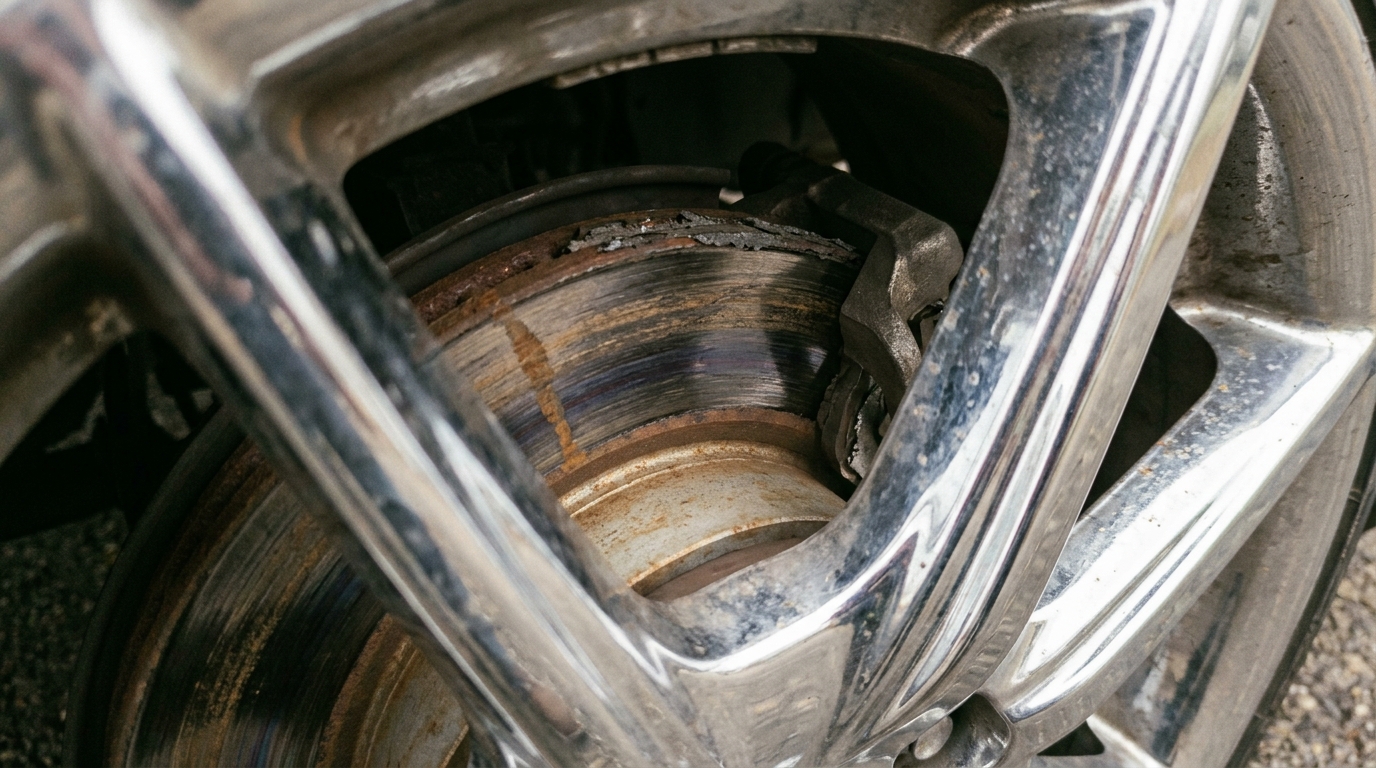
Your brakes need replacing when pad thickness drops below 3mm, when you hear persistent squealing or grinding, when the pedal feels soft or pulsates underfoot, or when your vehicle pulls to one side during braking. Any one of these signs is enough to schedule an inspection immediately.
Brakes are the single most critical safety system on your vehicle. Yet most drivers either replace them too early based on mileage myths, or push them dangerously past their limits because they're unsure what the warning signs actually mean. This guide cuts through the guesswork with specific, measurable indicators you can check yourself - and a clear breakdown of what each symptom tells you about your brake system's condition.
The Physical Warning Signs You Can See and Feel
Brake Pad Thickness: The 3mm Rule
Brake pads have a minimum safe thickness of 3mm. Most new pads start at 10–12mm. You can often check pad thickness by looking through the spokes of your wheel - the pad should be visible pressed against the rotor. If it looks thinner than a pencil eraser, get them measured immediately.
Most modern pads include a built-in wear indicator: a small metal tab that contacts the rotor when the pad wears to roughly 2–3mm. That's what causes the high-pitched squealing you hear during normal braking. This is not a "background noise to ignore" - it's a designed alert telling you the replacement window is open right now.
Grinding Means You're Already Too Late
If squealing has progressed to a harsh metallic grinding sound, the pad material is gone and the metal backing plate is contacting the rotor directly. At this point, you're damaging the rotor with every stop. A rotor that could have been resurfaced for $20–$40 per wheel now needs full replacement, typically $80–$200 per rotor depending on vehicle make. Don't mistake grinding for a "more urgent squeal." It's a different, more expensive problem.
Vibration or Pulsation Through the Pedal
A brake pedal that pulses or vibrates under your foot during normal stopping indicates warped rotors. Rotors warp when they heat unevenly - common after aggressive driving, towing, or repeated hard stops on a long downhill. The vibration you feel is the caliper literally bouncing over the high and low spots on the rotor surface. Warped rotors won't improve on their own. They need to be either machined flat (if enough material remains) or replaced.
Vehicle Pulling to One Side
If your vehicle consistently drifts left or right when you apply the brakes, one of three things is happening: a stuck caliper is applying uneven braking force, one pad has worn significantly faster than the other, or there's a brake fluid pressure imbalance. Pulling during braking is distinct from pulling during regular driving, which typically points to alignment or tire issues instead.
Dashboard and Fluid Warning Signs
The Brake Warning Light
Most vehicles have two brake-related warning lights. The red BRAKE light can indicate low brake fluid, an engaged parking brake, or a hydraulic failure. The orange or yellow ABS light means the anti-lock braking system has detected a fault. Neither light should be dismissed as a sensor glitch without investigation. If both illuminate simultaneously while driving, stop safely as soon as possible.
Low or Contaminated Brake Fluid
Brake fluid lives in a closed system. If the reservoir level is low, fluid has either leaked somewhere in the system or the pads have worn so thin that the calipers have extended further, drawing fluid down. Check the reservoir under the hood - it's a small translucent plastic container near the firewall. Fluid should sit between the MIN and MAX lines and appear light amber or nearly clear. Dark brown or black fluid is moisture-contaminated and needs flushing regardless of pad condition.
Brake Replacement: Pads vs. Rotors vs. Both
Not every brake job requires replacing everything. Here's a direct comparison to help you understand what each scenario typically involves:
Condition What Needs Replacing Approximate Cost (per axle) Pads worn to 3mm, rotors within spec Pads only $80–$150 Pads worn, rotors slightly uneven Pads + rotor resurface $120–$200 Grinding noise present Pads + rotors (full replacement) $250–$500 Pedal pulsation, visible rotor scoring Rotors (+ pads if worn) $200–$450 Soft or spongy pedal Brake fluid flush or master cylinder $80–$300How Many Miles Before Brakes Wear Out?
Mileage-based brake replacement schedules are largely unreliable. Brake life depends far more on driving style, terrain, and vehicle weight than on odometer reading. That said, here's what real-world data shows as typical ranges:
- City driving: Brake pads typically last 25,000–40,000 miles due to frequent stop-and-go braking
- Highway driving: 40,000–70,000 miles, with far fewer hard stops
- Aggressive or mountain driving: As few as 15,000–20,000 miles
- Rotors: Generally last through 2–3 pad changes, or 60,000–80,000 miles under normal conditions
Check your pad thickness at every tire rotation - typically every 5,000–7,500 miles. This gives you an early, accurate read on wear rate specific to how and where you drive.
The Soft Pedal Problem: Don't Overlook This One
A brake pedal that sinks too easily, or that you have to pump to build pressure, is one of the most dangerous brake conditions because it doesn't always make noise. A soft or spongy pedal typically indicates air in the brake lines, a failing master cylinder, or a brake fluid leak. None of these fix themselves. A pedal that hits the floor before the car stops is an emergency - do not drive the vehicle.
Front vs. Rear Brakes: Why They Don't Wear Evenly
Front brakes do roughly 70% of the stopping work on most front-wheel-drive vehicles. This means front pads wear significantly faster than rear pads. On many vehicles, you'll replace front pads twice before the rears need attention. Rear brakes on vehicles with drum-style rear setups wear even more slowly. Always check all four corners, but don't assume your rears are fine just because your fronts were recently replaced.
When to See a Mechanic vs. DIY
Pad replacement is a legitimate DIY job for mechanically confident owners with basic tools. Rotor replacement adds complexity but remains doable with the right equipment. However, if your brake warning light is on, you hear grinding, or your pedal feels soft - get a professional inspection before driving further. Brake hydraulics, ABS module diagnostics, and caliper rebuilding are not beginner territory.
When you do visit a shop, ask specifically for the measured pad thickness in millimeters and rotor thickness compared to the manufacturer's minimum specification. Both numbers should be on your receipt. Any shop that can't give you those numbers on request is not doing a thorough inspection.
When Brakes Need Replacing FAQ
How do I know if it's my pads or rotors that need replacing?
Squealing that stops when you release the brake pedal points to worn pads triggering the wear indicator. Vibration or pulsation through the pedal during braking points to warped or scored rotors. Grinding typically means both the pad and rotor are damaged. A mechanic can measure both components precisely - pad thickness should be above 3mm and rotor thickness above the manufacturer's minimum spec stamped on the rotor edge.
Is it safe to drive with squealing brakes?
Squealing from worn-indicator contact is safe for a short period - typically days to a few weeks - but it's a time-sensitive warning, not background noise to live with. If the squealing progresses to grinding, the window has closed and you're actively damaging your rotors with every stop. Schedule service within 48–72 hours of first hearing the squeal.
Do I need to replace brakes on all four wheels at the same time?
Replace brakes in axle pairs - both fronts together or both rears together - to maintain even braking balance. You don't need to replace all four corners simultaneously unless all four are worn. Replacing only one side of an axle creates uneven braking force and causes the vehicle to pull dangerously during stops.
How much does a full brake job cost in 2026?
A complete four-wheel brake job including pads and rotors on a standard passenger vehicle runs $500–$1,000 at most independent shops, and $800–$1,400 at dealerships. Luxury or performance vehicles with larger brake components cost more. Pads-only service on a single axle typically runs $80–$150 parts and labor at an independent shop.
Can I make my brakes last longer?
Yes. Anticipating stops and braking gradually rather than hard at the last moment is the single biggest factor. Reducing speed before long downhills and using engine braking in lower gears instead of riding the brakes also dramatically extends rotor and pad life. Carrying less unnecessary weight in your vehicle reduces braking load. A 2024 fleet study by the American Transportation Research Institute found that driver behavior accounted for up to 40% of brake wear variation across identical vehicles in similar conditions.